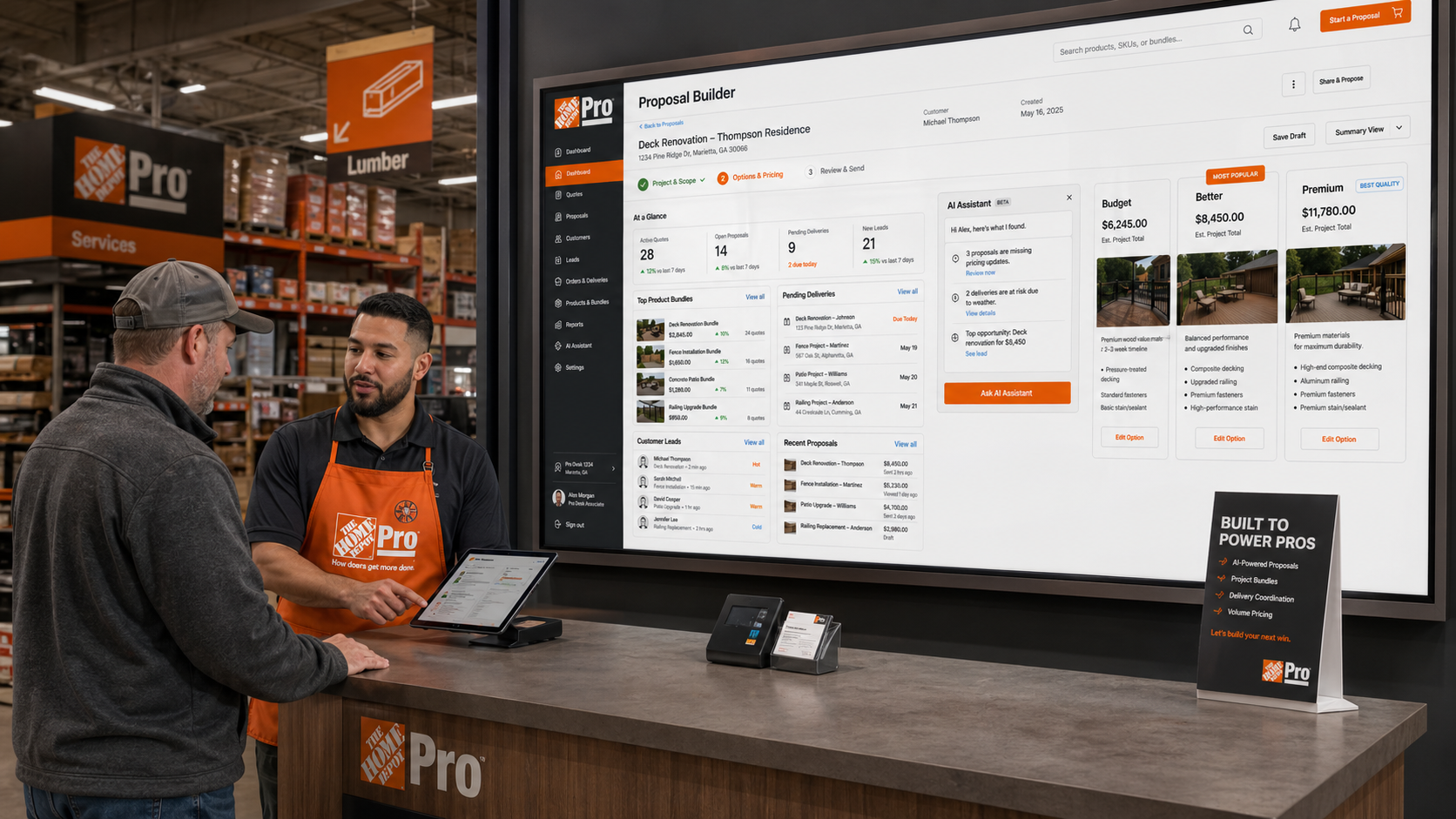
artificial grass
sales
commercial

About 20 years ago, I worked with Bosch professional power tools. Back then, the product was never the problem. The tools were excellent. Durable. Engineered to perfection.
But the way we sold them? That’s where the opportunity still lives today.
>>> Want to see the system and the implementation steps? Click here to scroll down.
Large factories, institutional buyers, global contractors…
They don’t buy drills.
They don’t buy grinders.
They don’t even buy brands.
They buy:
The best sales managers and regional executives understood this. However, each sale was a custom-made product, each sale was a series of discussions, and most dealers were too far from understanding this approach, selling tools, not solutions.
When the office was overloaded, deals were falling apart. Dealers would fly thousands of miles to get a little step closer to understanding the position and sell better.
Yet most sales approaches still look like this:
It’s slow. Fragmented. Inconsistent, and leaves money on the table.
If I were to rebuild this today using Proven Dude methods, I wouldn’t sell tools.
I would build a Corporate Tool System.
Here’s what that looks like:
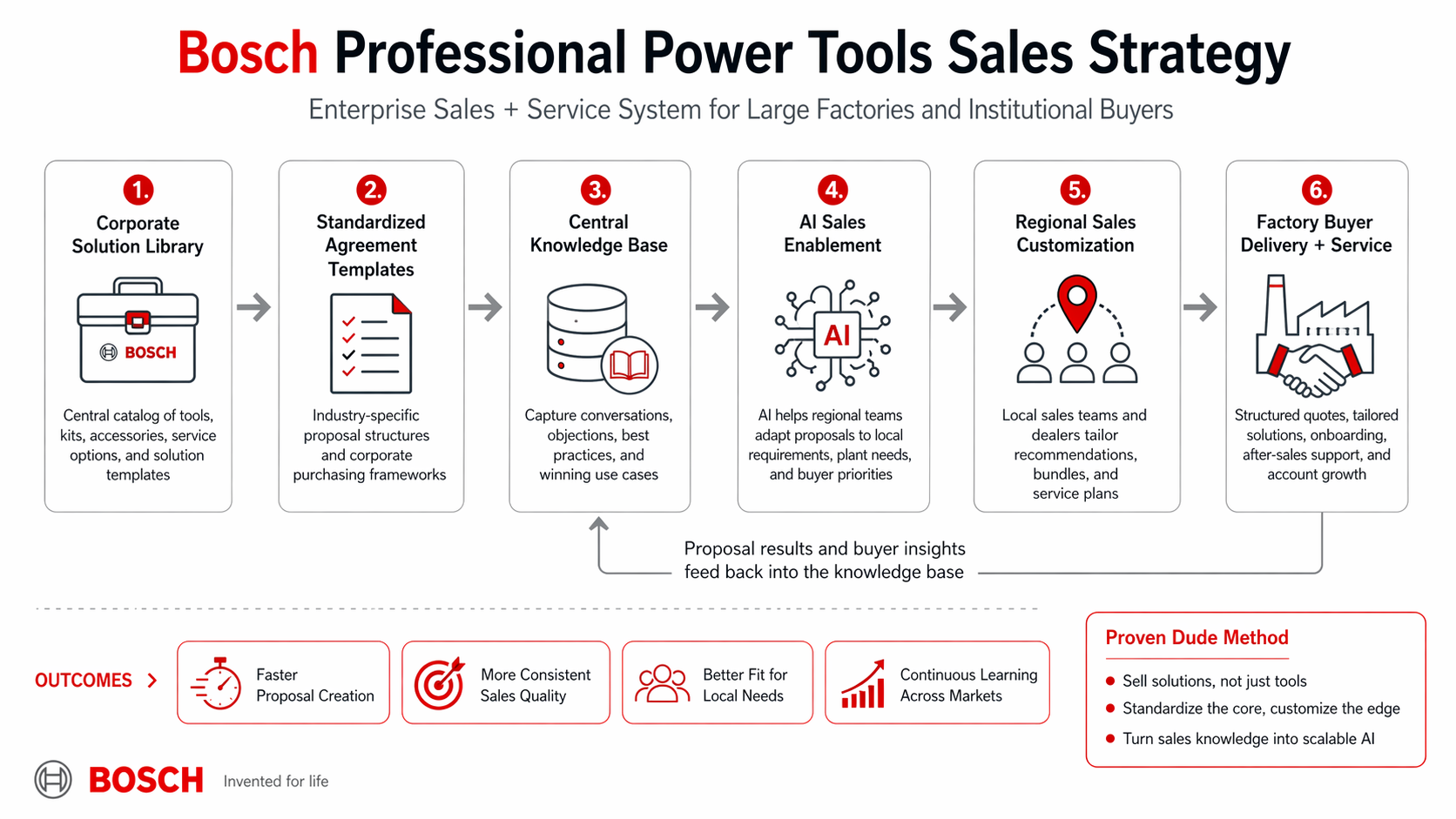
Instead of quoting tools one by one:
Each template becomes a starting point, not a blank page.
Imagine this:
A factory doesn’t ask:
“What’s the price of this drill?”
They say:
“We need to equip 120 technicians across 3 plants.”
The system instantly generates:
All pre-structured. All adjustable.
Like a menu—but engineered for operations.
Every conversation becomes an asset.
Over time, this becomes:
A living AI-trained knowledge base of how large deals are actually won
Not theory. Real deals.
Now this is where it gets interesting.
A regional sales manager in Germany, the US, or Dubai doesn’t start from scratch.
They get:
An AI assistant that says:
“Here’s how deals like this were won before—adapt this.”
Instead of weeks or months:
Tools with interactive, API, and AI capabilities become the delivery engine—but the real value is in the system behind it.
You stop being:
A supplier of tools
And become:
A system provider for operational performance, scaled globally, with the best salesperson and the strongest marketing team, stays behind every deal on autopilot.
That shift does three things:
Bosch is just a perfect example.
But this model applies to any company that sells:
To large buyers.
If you provide packages of products for commercial projects, you’re sitting on the same opportunity.
What if your company could:
Help sales teams create better commercial proposals faster.
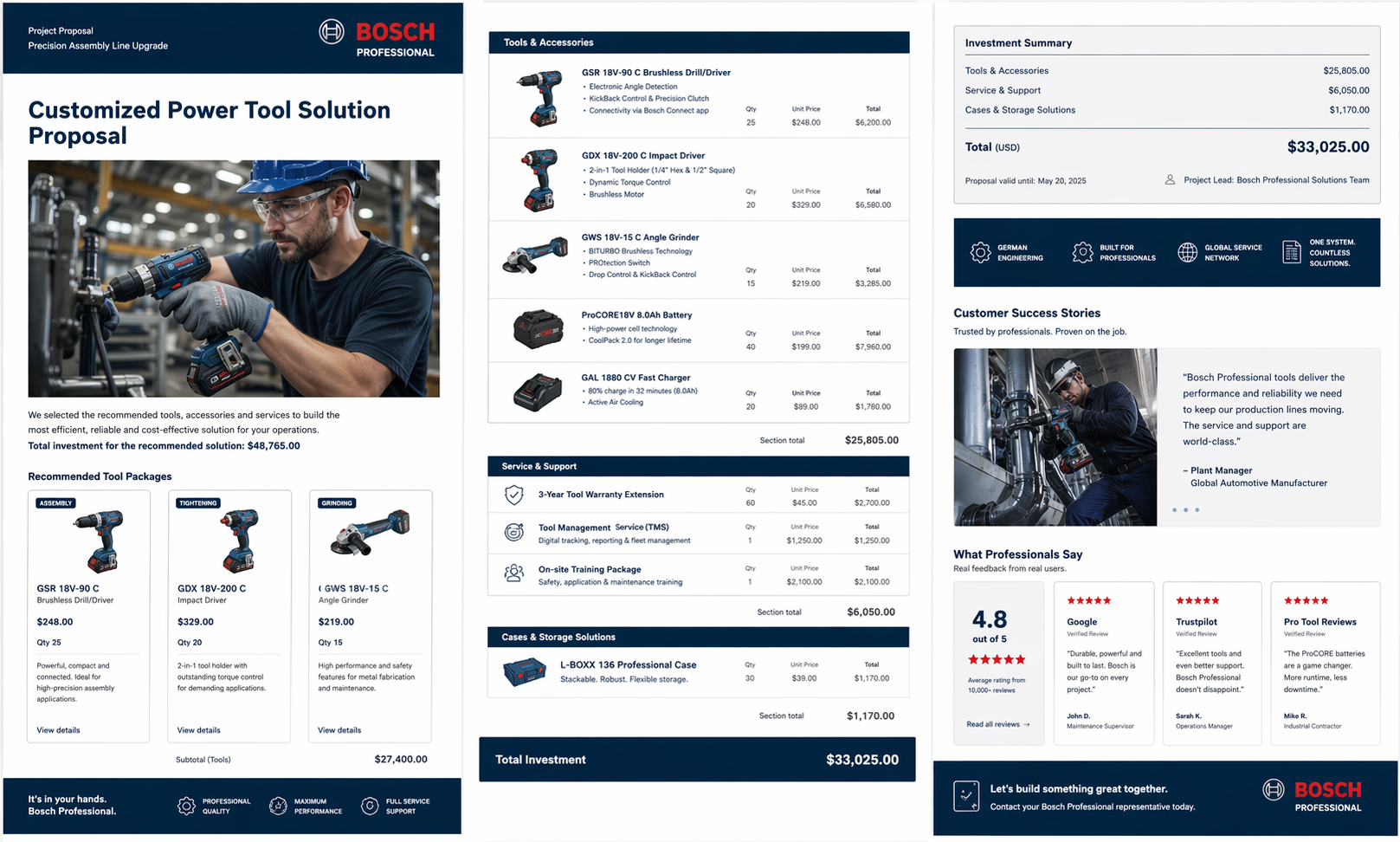
The system should turn company knowledge, product catalogs, service options, local support, and winning sales language into professional proposals that can be customized for each customer.
This is not just proposal automation.
It is a better way to sell.
Start by gathering everything the company already uses:
Then analyze what works.
Look for:
The goal is to stop losing good sales knowledge inside emails, folders, and individual salespeople’s heads.
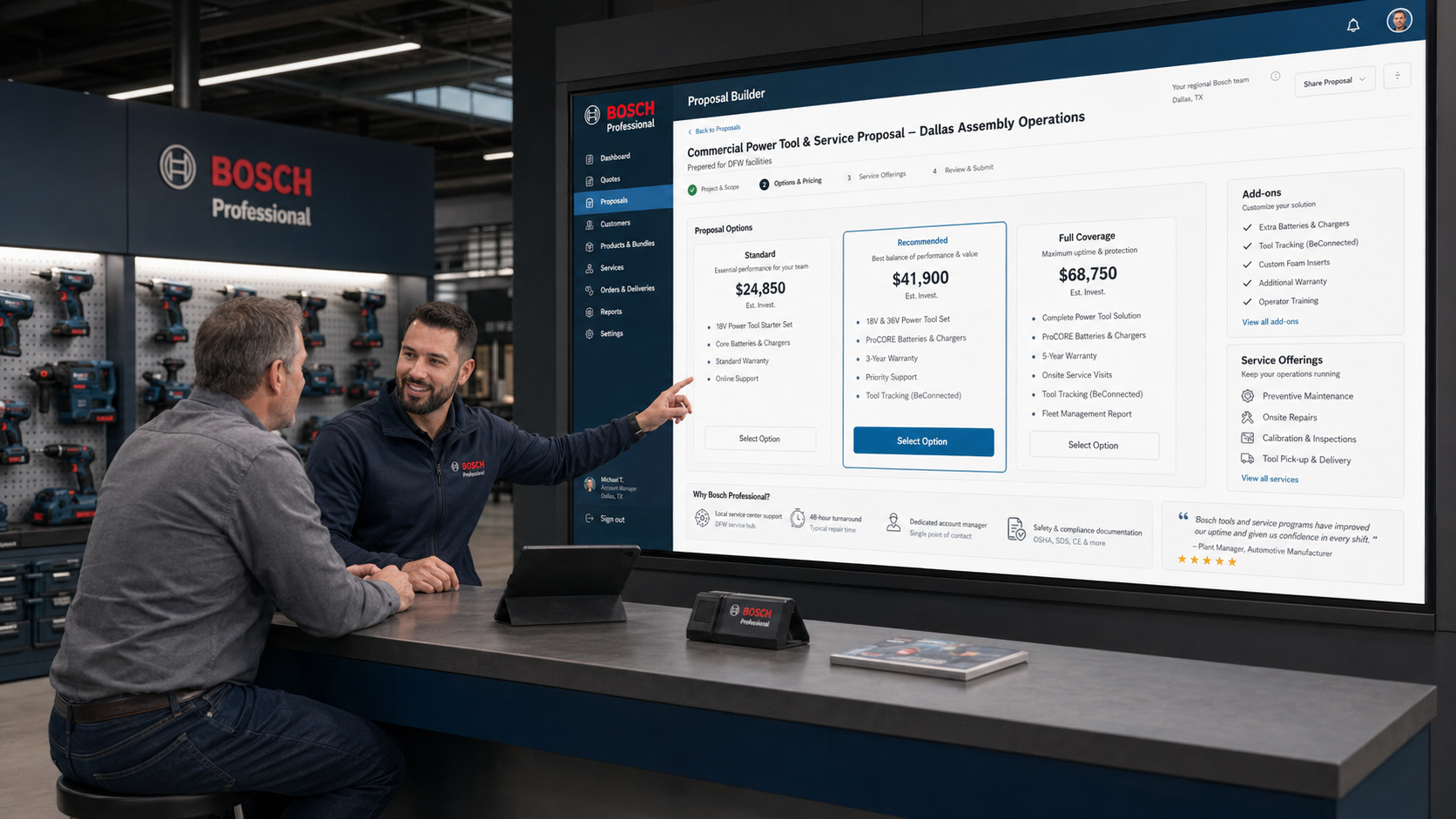
Most companies sell too many individual products. Customers do not want to figure everything out themselves. They want a clear recommendation. So the system should turn products and services into simple packages: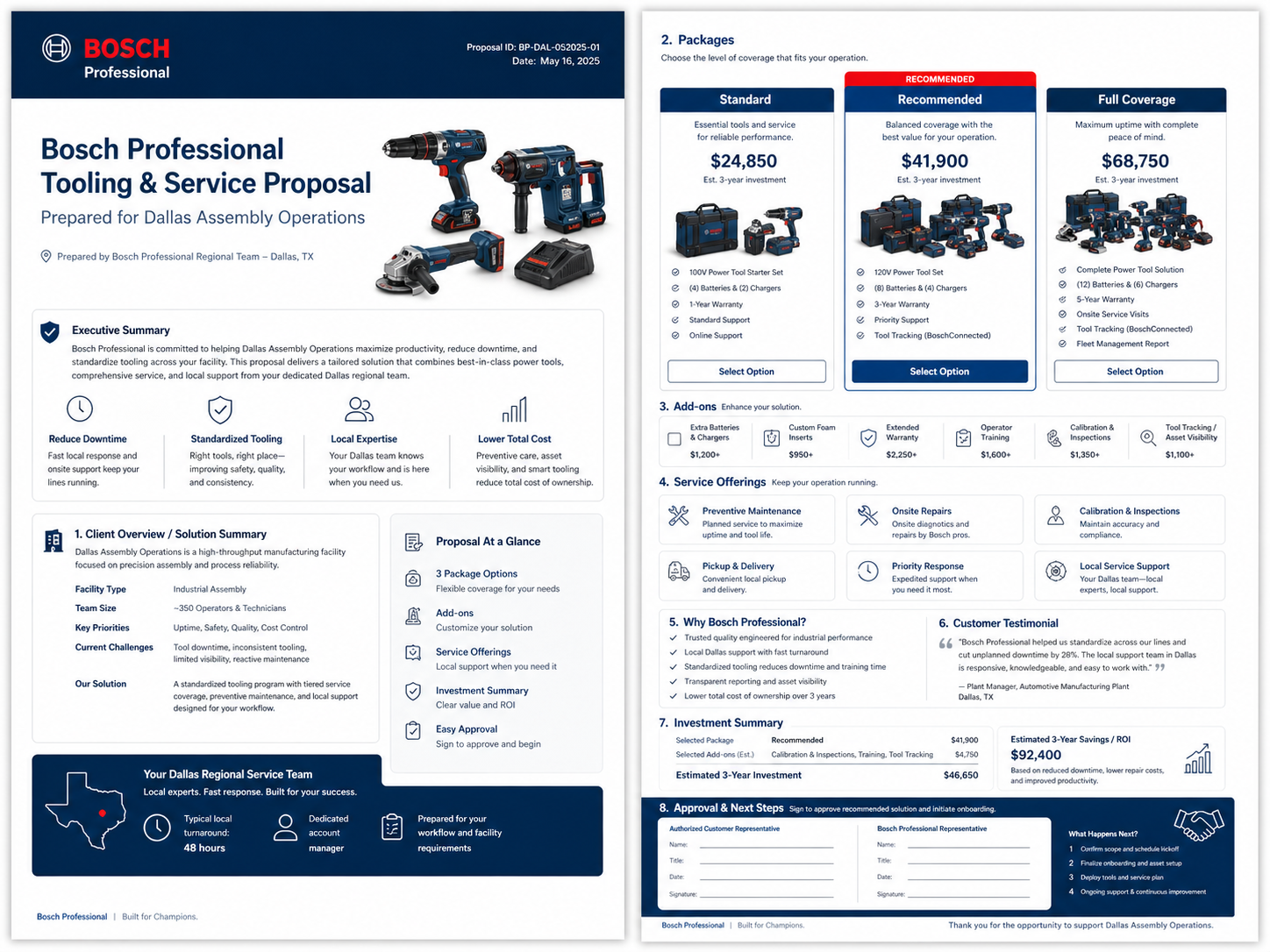
For customers who need a reliable starting point.
For customers who want the best balance of performance, service, and value.
For customers who want maximum uptime, support, and protection.
Each package can include:
This makes the proposal easier to understand and easier to approve.
A strong proposal should not stop with the base package.
It should also show useful add-ons and service options.
Examples:
Add-ons should not feel like random extras.
They should solve real customer problems:
The company needs one organized place where sales knowledge lives.
This knowledge base should include:
This knowledge base becomes the brain behind the proposal system.
It allows sales teams and AI tools to create proposals that are consistent, accurate, and persuasive.
The CRM should tell the proposal system who the customer is.
It should include:
Then the proposal can be customized automatically.
A proposal for a factory in Dallas should not sound the same as a proposal for a school district in Chicago.
The structure can be the same.
The wording should feel local and relevant.
Sales teams need flexibility, but they also need guardrails.
Some sections should stay controlled:
Other sections should be easy to customize:
The system should help salespeople tailor proposals without weakening the brand.
The AI assistant should help the sales team create stronger proposals.
It can help with:
For example:
“This customer mentioned downtime. Consider adding preventive maintenance and priority response.”
Or:
“This is a regional manufacturing client. Add local service support and compliance documentation.”
The AI should not replace the salesperson.
It should make the salesperson sharper.
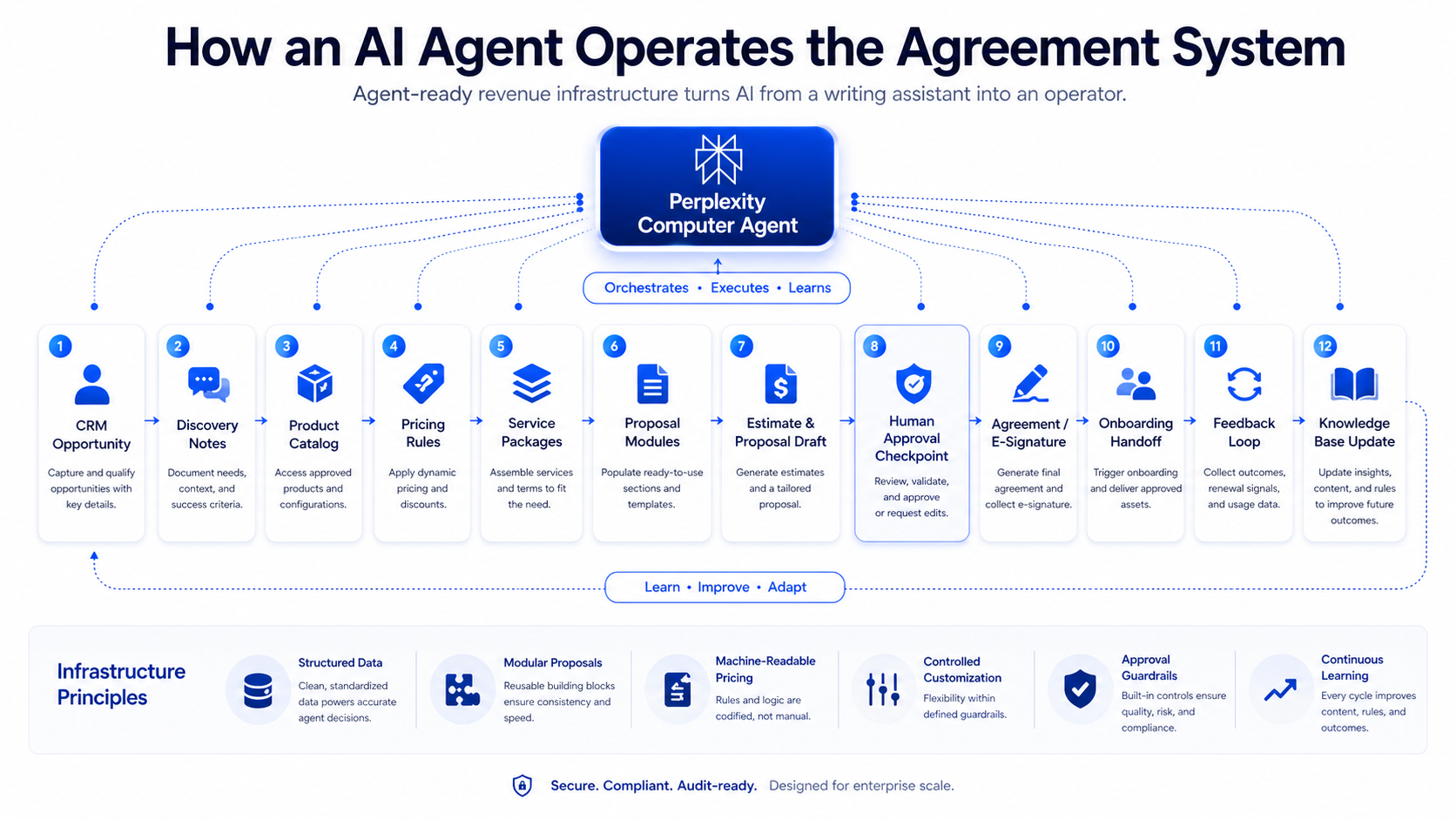
The process should be simple:
This creates one clear path from opportunity to signed agreement.
Do not roll it out to everyone at once.
Start with a small pilot:
Track:
The first version will not be perfect.
The pilot shows what needs to be improved.
Training should focus on the new way of selling.
Sales teams need to learn:
This is not just software training.
It is sales enablement.
After the pilot, improve the system.
Update:
Then roll it out in stages:
The system should track performance.
Important metrics include:
This data helps managers see what is working.
Over time, the system becomes smarter.
A commercial proposal system should do more than create documents. It should help the organization sell better.
The simple plan is:
The result is a sales system that helps teams create better proposals faster, customize them for each customer, protect brand consistency, and increase deal value.
20 years ago, we were selling some of the best tools in the world. Today, the companies that win won’t just have the best tools. They’ll have the best systems for selling them.
With kind regards,
Boleslav Zhukovskiy ( Proven Dude )